
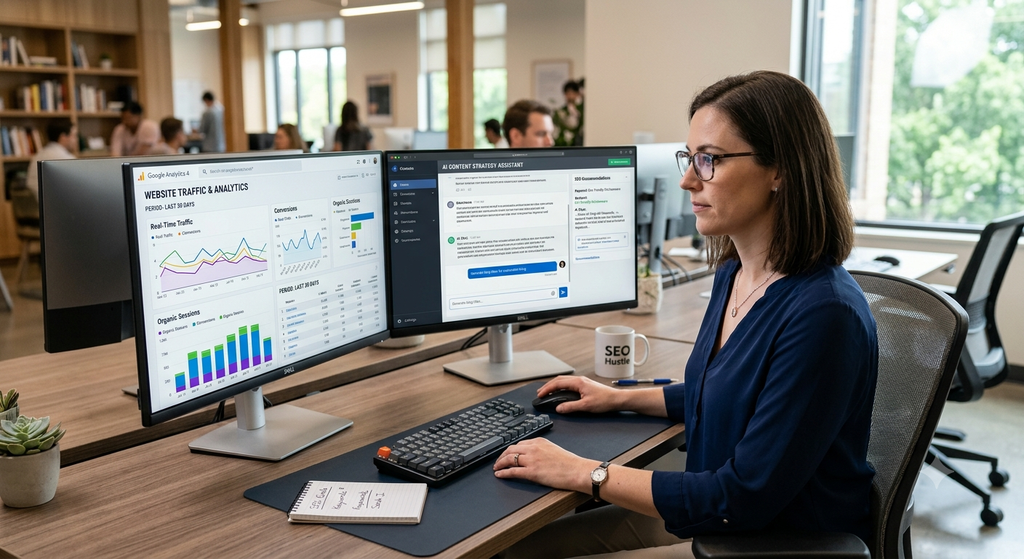
AI technical SEO audit,Many people ask if AI can do their SEO audits. .A better way to think about it is to ask where it actually saves time without making the results worse. After trying it on audits, I found the best results come when AI handles sorting and pattern-finding while a person still makes the decisions. The crawler gets the data. AI makes the patterns appear faster. Then you decide what matters and what needs fixing.
This is how I ended up working with AI, and the common mistakes that happen. An AI technical SEO audit is not about putting a URL into a chatbot and waiting for a list of issues. It is like using AI on top of data from crawlers, Search Console, analytics, and logs. I see AI as good at finding patterns across rows of data but not as the final answer. It can seem certain even when it is wrong.
The real time saving happens in four areas. First it helps sort through crawl data to find issues like redirects or problems with indexability. Second, it adds traffic numbers to tell issues from fixes. Third it helps find where a template is causing repeated problems of checking each page one by one. Fourth, it makes the findings into explanations for reports or tickets. Finding patterns in sets of data is the part that turns hours into minutes for me.
The process starts with running a crawl using something like Screaming Frog or Sitebulb to get status codes, titles, links, and structured data. Then add Search Console and analytics to separate issues from noise. Next, clean the data in a spreadsheet by grouping pages and removing columns. After that, send the tables to AI. Ask for patterns or outliers by template. The model gives back ideas with examples. Not the final solutions.
Then check sample URLs in the browser and in Search Console to see how many pages are affected and what the business impact looks like. Verified issues go into tickets. When making those tickets, AI can help write steps and acceptance criteria, but counting should stay with a script or formulas. I use AI for the context and code for the numbers.
Mastering Large-Scale Websites: A Practical Approach to an AI Technical SEO Audit
When handling SEO analysis, my philosophy is simple: keep it practical, grounded, and driven by hard data. Instead of guessing why a site is struggling in search results, I rely on a core stack of tools that paint a clear picture of overall website health, search performance, and hidden technical friction.
My daily workflow typically centers on three main pillars:
- A reliable website crawler to extract comprehensive technical SEO data.
- Google Search Console to gauge real-world search visibility and performance metrics.
- Spreadsheets or Python scripts to ingest, clean, organize, and slice large volumes of raw information.
Once the data is structured, I lean on large language models to help spot complex patterns, connect disparate data points, and surface valuable insights. For standard websites, this toolkit is usually more than enough to diagnose and resolve everyday visibility issues.
However, the game changes entirely when you manage enterprise-level sites—especially e-commerce platforms boasting hundreds of thousands of URLs and intricate product variations. In these scenarios, manual investigation becomes a massive bottleneck. This is precisely where combining workflow automation, advanced data analysis, and an AI technical SEO audit becomes invaluable.
Case Study: Uncovering Canonical Misconfigurations at Scale
On a recent e-commerce project, I ran into a classic enterprise headache: thousands of distinct product variant pages were pointing their canonical tags back to a single primary product URL.
While consolidating duplicate content via canonical tags is a valid practice, it creates major indexation hurdles when individual product variations need to be treated as unique, searchable landing pages.
To get to the bottom of the issue, I pulled data from our website crawler and cross-referenced it with performance signals inside Google Search Console. Running an AI technical SEO audit on this combined dataset made it easy to isolate the anomaly—revealing that an overwhelming majority of product variants shared an identical canonical destination without individual checks on every single URL.
Moving from Pattern Recognition to Root Cause Analysis
Spotting the pattern was only half the battle during our initial AI technical SEO audit; I still needed to find the source. By inspecting the rendered HTML of the affected pages as part of the core AI technical SEO audit checklist, I discovered that the problem originated in the site’s underlying code template. The template was hardcoded to automatically stamp the main product URL as the canonical tag for every single child variant, stripping out the dynamic logic needed for individual variant indexing.
Once the root cause was clear through our preliminary AI technical SEO audit findings, defining the solution was straightforward. We updated the template logic so that product variants evaluated during the AI technical SEO audit could generate correct, context-aware canonical URLs based on the site’s strategic intent:
- Independent variants flagged in the AI technical SEO audit pointed to their own unique URLs.
- Intentionally consolidated variants reviewed via the AI technical SEO audit continued sharing a unified canonical path.
The Future of Enterprise SEO: Automation and Human Judgment
This experience encapsulates how I approach modern web optimization: I use tools and AI to process data at scale, surface unusual trends, and accelerate investigations, but I never rely on automation blindly. Every insight is validated by inspecting actual code implementation and understanding search engine rendering behavior.
For massive enterprise properties, this methodology scales effortlessly through automated data pipelines that regularly ingest, clean, and compare crawler logs with Search Console metrics. This makes continuous monitoring feasible across millions of URLs, helping teams detect regressions and prioritize fixes based on potential impact.
Ultimately, performing an effective AI technical SEO audit isn’t about replacing human expertise—it’s about enhancing it. True optimization success happens when reliable data, intelligent automation, and hands-on technical troubleshooting work together to solve complex problems and drive lasting search performance.
Avoiding Blind Trust: Best Practices
The biggest problem I see today is practitioners treating AI output as absolute facts without verification. For instance, a flagged missing meta description does not always mean it needs fixing if the page ranks well dynamically, and a redirect that looks wrong on paper might be an intentional marketing decision. Making sweeping changes across a site before testing can cause more problems than it solves.
To keep your workflow safe and effective, build this habit: gather concrete evidence, let your language models suggest patterns, and then test those ideas directly against live URLs and official guidelines such as the Google Search Central Documentation before touching any code. You can also cross-reference technical optimization frameworks and routing standards on Moz and the Ahrefs Blog to validate your foundational metrics. For a closer look at structuring your overall organic strategy, check out our previous breakdown on optimizing site architecture and crawl budget management.
Scaling and Practical Next Steps
- Assess Site Scale: Smaller sites do not always need this process; there is no point in overinvesting when the number of URLs is low.
- Verify Compliance: Always check the data rules and privacy terms of any tools you use.
- Take Your First Step: To start, take one crawl file, pick one issue like canonical clashes, ask for patterns, and check before making any changes. The goal is to spend less time guessing and more time looking at data. (For more details on automating workflows, see our guide on leveraging python for automated log file analysis.)
Conclusion: Bridging Technical Excellence and Human Strategy
Ultimately, modern search optimization requires more than just blindly following automated suggestions or relying on raw data extracts. True success comes from combining reliable metrics, programmatic efficiency, and rigorous human validation to solve deep-seated technical hurdles. Whether you are managing massive e-commerce frameworks or scaling a local web presence, combining data-driven automation with expert oversight ensures your website stays resilient against algorithm updates and delivers enduring performance.
For businesses looking to implement these advanced strategies seamlessly, partnering with a professional Freelance Digital Marketer in Idukki can help bridge the gap between technical execution and sustainable online growth.https://ebinbinoyjohn.com/